Political thriller book club questions should move beyond plot recall and force readers to argue about power, institutions, secrecy, sacrifice, and moral compromise. The twenty prompts below work with most political thrillers and political satires, including The Ironic Ineptocracy.
Questions about power and competence
- Which character had the most power, and which character understood power best?
- Where did incompetence become useful to someone more capable?
- Did the institution fail, or did it produce the outcome its incentives favored?
- Which leader confused authority with competence?
- Who benefited most from describing the crisis as unavoidable?
Questions about corruption and private influence
- Where did access become influence, and where did influence become control?
- Did any character remain technically within the rules while violating their purpose?
- Which relationship carried more political weight than the official chain of command?
- Was the central private actor buying a decision, a dependency, or the range of options?
- Who received the benefits, and who received the invoice?
Questions about propaganda, memory, and truth
- Which slogan did the most work with the least truth?
- What event changed meaning after another character controlled the description?
- Who preserved evidence, and who controlled whether it counted?
- What did the public in the novel know, and what had it merely heard often?
- If one missing document reappeared, whose story would collapse first?
Questions about sacrifice and moral compromise
- Who was treated as expendable before anyone used the word sacrifice?
- Which compromise looked reasonable in the moment but changed the entire moral direction?
- What would you have leaked, hidden, or refused in the protagonist's position?
- Did friendship operate as protection, obligation, or an alternative intelligence network?
- Does the ending deliver justice, survival, compromise, or a better-managed version of the same machine?
Anchor disagreement to a scene, decision, or line from the book. Ask readers to cite the text before they cite the news. Political fiction works best as a shared simulation, not a disguised argument about which person at the table is wrong.
A 60-minute political thriller book club format
| Time | Discussion move | Purpose |
|---|---|---|
| 0–10 minutes | Choose the most consequential decision | Begin with the text, not general politics |
| 10–25 minutes | Map who had formal and informal power | Expose the hidden chain of influence |
| 25–40 minutes | Debate one moral compromise | Make readers defend a position |
| 40–52 minutes | Audit propaganda and missing evidence | Test how the story controls truth |
| 52–60 minutes | Rewrite one decision | End with consequence, not consensus |
Questions specific to The Ironic Ineptocracy
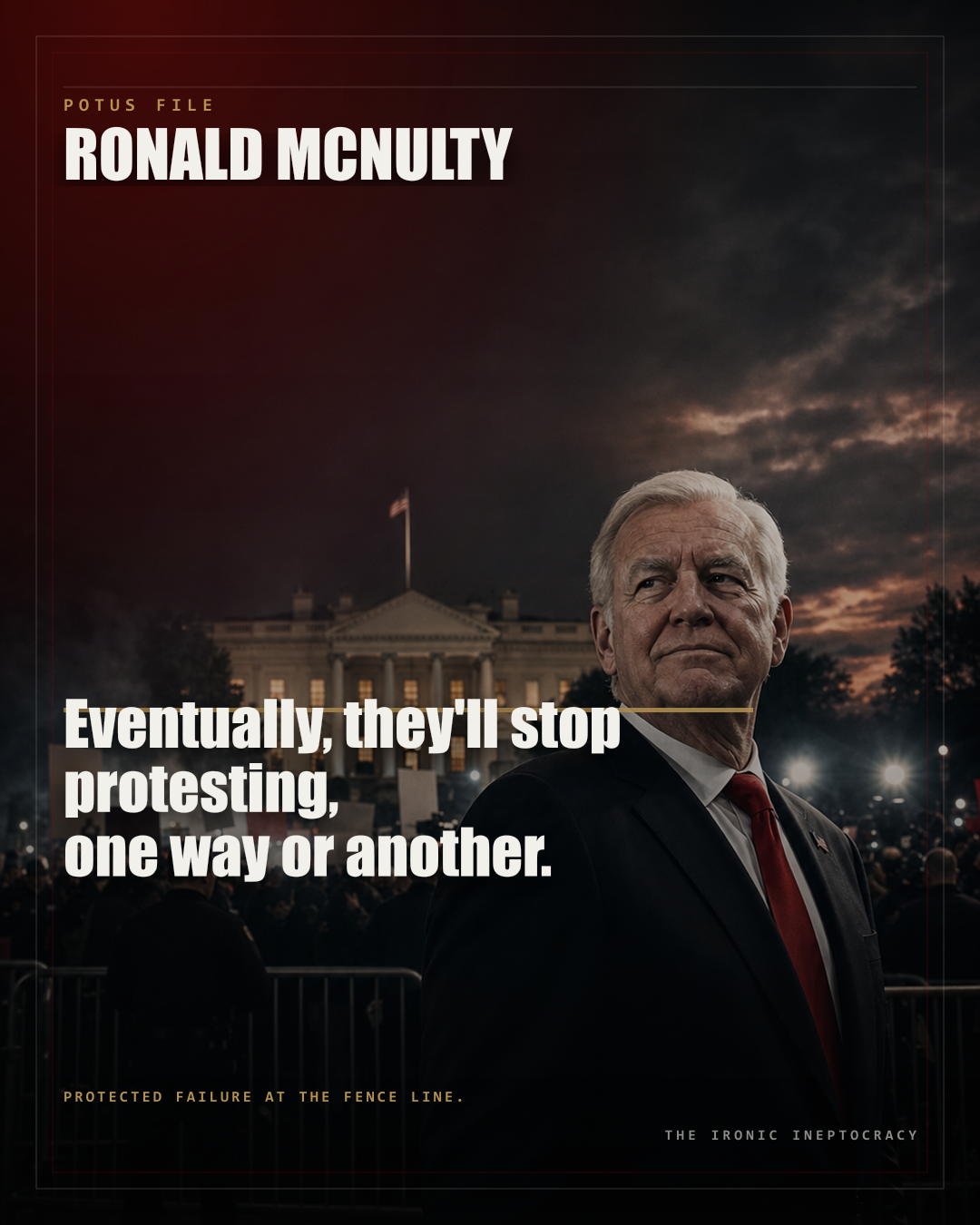
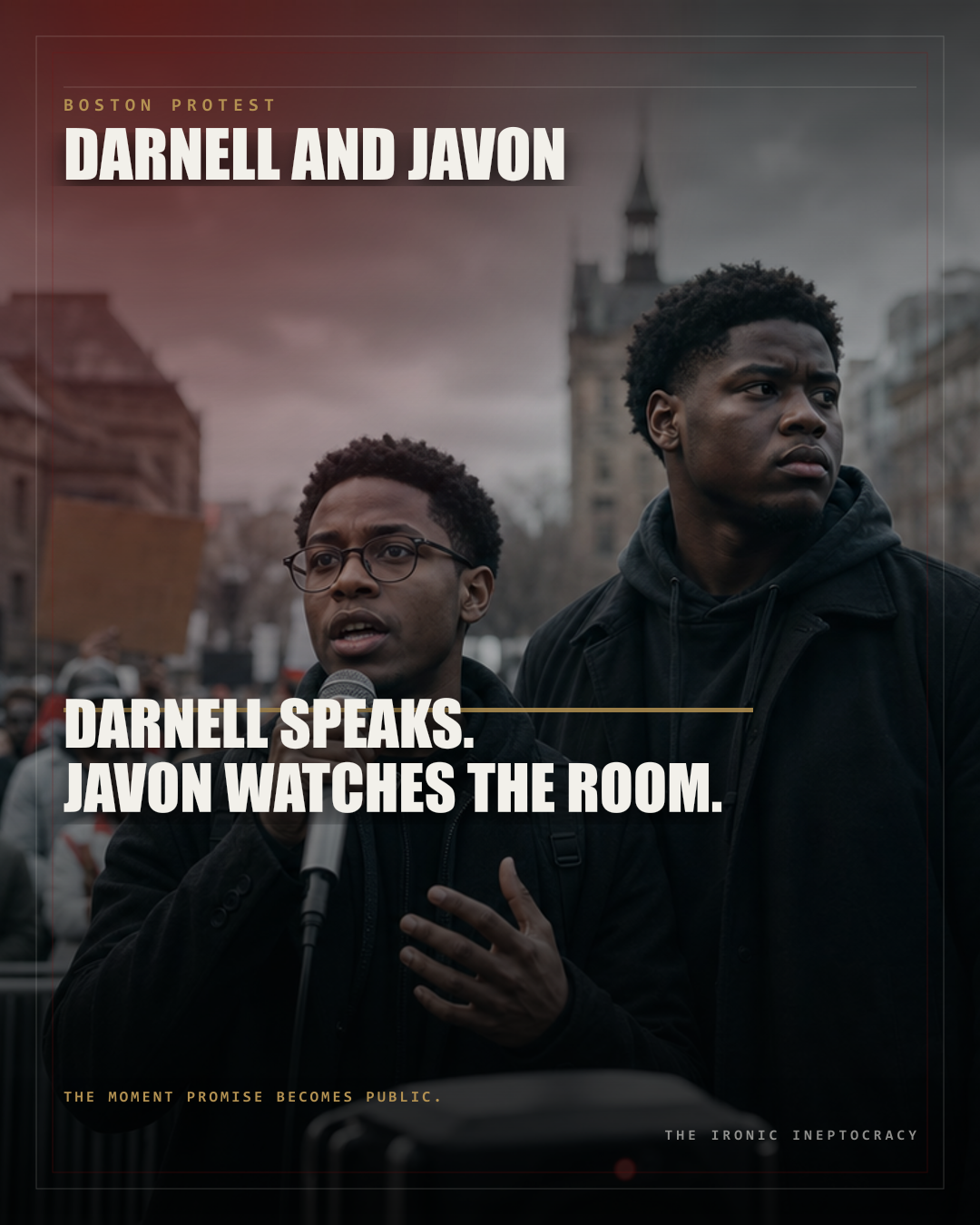
For groups reading Dillon Mohr's novel, begin with Darnell's intelligence as both gift and liability. Then trace the relationship between public incompetence and Dijon Garnier's private competence. The strongest discussion is not “Who is the villain?” It is “Which system made the villain's method rational?”
Frequently asked questions
What are good political thriller book club questions?
Good questions ask readers to evaluate decisions, power, corruption, institutional incentives, secrecy, and moral compromise. They should support more than one defensible answer.
How do you discuss politics in a book club without fighting?
Keep the discussion anchored to the text. Ask members to cite a scene or decision, separate a character's argument from a reader's identity, and treat the novel as a shared thought experiment.
How many book club questions should you use?
For a one-hour discussion, select five to eight questions. Use follow-up questions rather than rushing through a long list.
Sources and further reading
Dillon Mohr is the author of The Ironic Ineptocracy, a satirical political thriller about brilliance, friendship, private money, public failure, propaganda, and manipulated memory.