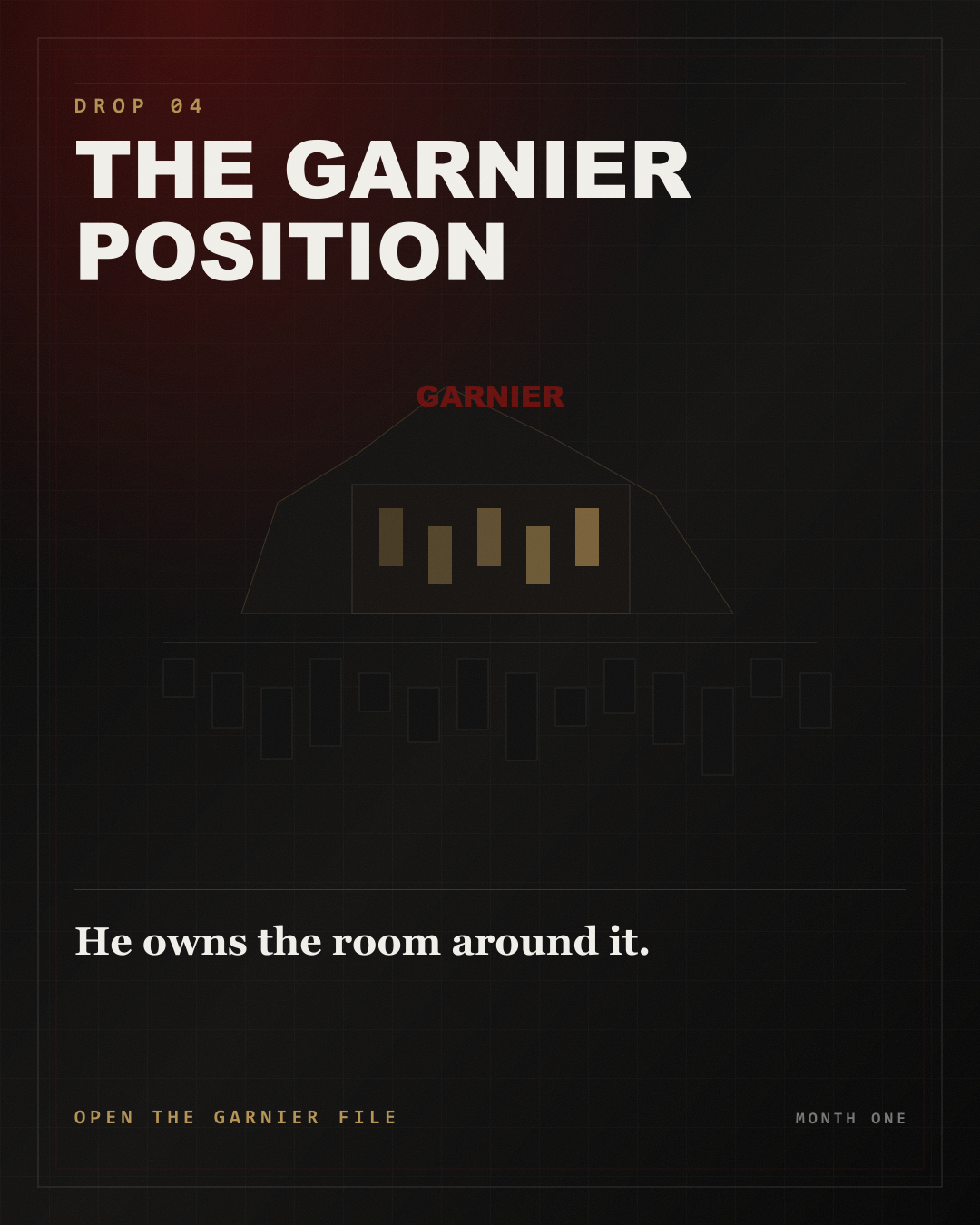
The Garnier position is power that does not need to win office because it controls the conditions around office. It funds the room, owns the route into it, and remains after the elected occupants leave.
Dijon Garnier is the clearest expression of that position in The Ironic Ineptocracy. He is not simply a billionaire villain. He is an argument about what private wealth becomes when access hardens into infrastructure.
How private wealth becomes political power
Money buys proximity first. Invitations, consultants, foundations, and introductions create a field in which the wealthy person is always present before any specific favor is requested.
Proximity becomes dependency. Public institutions come to rely on private systems, private data, private logistics, or private generosity. The relationship can still be described as partnership, but one side can leave and the other cannot.
Dependency becomes authorship. The private actor no longer reacts to policy. He helps define which options appear realistic, which crises deserve urgency, and which costs are treated as unavoidable.
Why Garnier is more dangerous than a loud demagogue
A demagogue needs attention. Garnier needs integration. He is most powerful when the public argument appears to exclude him while every viable outcome passes through something he owns.
That makes him a useful political thriller antagonist. The threat is not hidden in a secret lair. It is visible as a foundation, a board seat, a procurement contract, a private terminal, or a charitable intervention whose terms arrive after the gratitude.
His character file names the public mask and the private logic. The wider cast dossier shows who encounters that architecture from below, beside it, and from within.
The four layers of the Garnier position
- Access. The right person answers the call before the public knows a decision exists.
- Dependency. Essential work runs through systems the private actor can withhold.
- Legitimacy. Philanthropy converts leverage into reputation.
- Distance. The final harm is carried out by institutions that appear independent.
What a billionaire villain should reveal
The easy version of a billionaire villain is greed with a tailored suit. The more interesting version reveals the ecosystem that makes greed look like competence. Garnier matters because people around him have learned to describe dependence as leadership.
His position also tests every other character. Resistance is not only a question of courage. It is a question of whether anyone can act without using a route Garnier already controls.
This is the center of the open file: selection decides who can be spent, memory control decides what the public keeps, and private infrastructure decides which alternatives can survive.
Questions that reveal private government
What stops working if the donor leaves? The answer separates generosity from dependency.
Who can reach the decision before it is public? For example, early access can be worth more than a visible campaign contribution.
Which public option depends on private infrastructure? That dependency marks the boundary where private wealth begins to govern.
Read the sequence from Who Gets Spent and The Memory Economy. Then open the Garnier Dossier for the full reader entry point.